
Material Archive An archive only exists when it is accessed, interpreted, and updated. The annual exhibition of the Master’s in Graphic Design and Editorial Projects (MDGPE) serves as a critical laboratory where students explore digital and material ecosystems. In conceiving the projects and the exhibition layout itself, they rehearse their role as cultural mediators and researchers. The consolidation of this collection advocates for a return to the body and to the tactile experience—embodied design—demonstrating that editorial innovation stems from an intentional slowing down.
Otherness, Acceleration, and Authorship In a time of digital saturation, algorithms narrow the space for nuance. Simultaneously, technical automation driven by Artificial Intelligence redefines the classic concept of authorship. Against this backdrop, the exhibited works propose a reclaiming of otherness and an embrace of the materiality of human interactions. Born from individual and collective efforts developed across different course units, these artifacts use deceleration as a form of resistance against algorithmic speed and contemporary fragmentation. A greater slowing down and reflection in the consumption of information is imposed, questioning the formats that distance society from tactile communication.
From Invisible Narratives to the Exploration of Editorial Materiality Current and future designers use the printed page, the poster, and the archive to rewrite micro and macro-narratives. Within the multiple connections this exhibition’s archive enables, one can identify artifacts that challenge values and solutions taken for granted today. Proposals emerge that deconstruct gender norms, document the unsigned work of women in Portuguese design, and combat civic apathy. Visibility is given to the decolonial effort in the analysis of visual culture and the urgency of preserving heritage—visible, for instance, in the rescue of Luso-African vinyl records or Madeiran embroidery.
Simultaneously, the return to physical and corporeal experience takes shape in a morphological exploration where the media becomes the message itself: temporal mapping demands a new physical posture from the reader; objects emerge that mimic human, plant, and animal anatomies through the materials and finishes that enhance them.


The Exhibition’s Morphology: The Archive as Support and Community Extension Born in response to an extracurricular challenge presented to the students, the visual identity of the exhibition transcends the strict fulfillment of an academic program or course unit. The visual identity and the exhibition design explore the urgency of materiality in a time of increasingly digital consumption.
In response to the forgetting of the physical object, the inclusion of folding instructions invites the handling of and interaction with the mediums, rescuing a dimension that the screen cannot replicate. The repurposing of papers with different colors and textures—some belonging to the exhibited projects themselves—lends graphic density to the exhibition’s identity. The physical support acts simultaneously with the design, elevating the communication itself. Far from an opposition between the physical and the digital, the complementarity between both is valued: while the physical space celebrates the physicality of the object and the work of the community, the collection is consolidated in an interactive digital archive that, although foregoing the tactile experience, ensures expanded access and a greater dissemination of the students’ works.


Transforming the Experimental Laboratory into a Critical Archive The works displayed in this exhibition are part of a broader and more plural ecosystem, where introspective visual essays, practical applications, and a sense of social responsibility coexist. It is precisely in this plurality of approaches that each student’s contribution is celebrated, and the living identity of this master’s program is built.
The space and autonomy granted throughout the course allow for the exploration of practices, methodologies, themes, and contexts that cross digital code with the hands-on workshop dimension, illustration with infographic synthesis, and comprehensive conceptualism with the precision of typographic design.
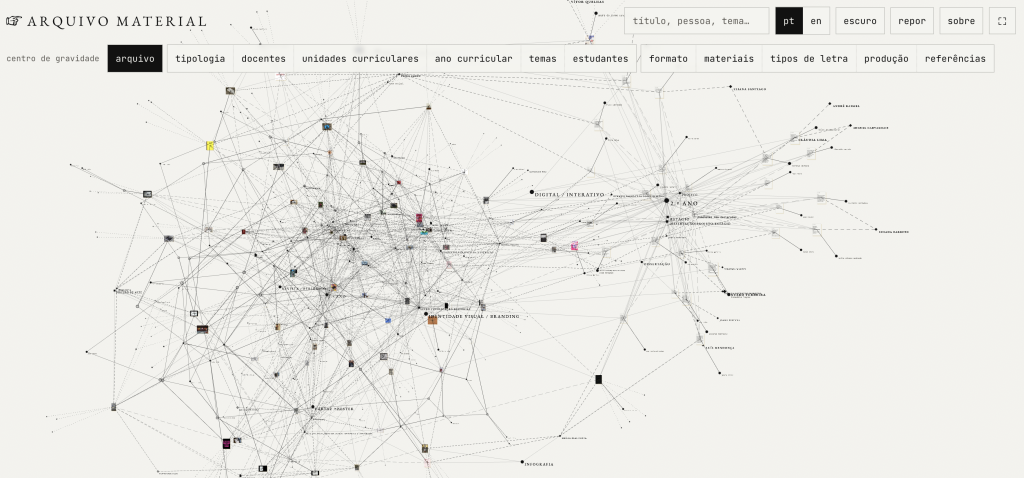
About the Exhibition’s Digital Mapping In an era of digital saturation, where the speed of algorithms tends to erase the space for nuance, the challenge presented to MDGPE students in 2025–26 focused on reclaiming a sense of otherness and the tactile dimension of interactions. Good contemporary design demands a slowing down: it compels the user toward active reflection, to turn a page with intent, and to engage in an embodied experience with the physical presence of the object.
In light of this premise, inviting the public to immerse themselves in a digital interface might seem paradoxical. However, this platform does not seek to mimic the tactile surface of the works, nor does it aim to contribute to visual overload. Rather than accelerating consumption or encouraging passive scrolling, this tool acts as a system of critical mapping and indexing. Its purpose is to reveal the systemic connections that are not immediately visible in the physical space: shared social concerns, intersecting formats, technological processes, and thematic constellations—ranging from the rescue of omitted memories to the exhaustive exploration of editorial morphology.
A collection only truly comes alive when its components converse with one another and are continuously reinterpreted by those who consult them. By visualizing this underlying network of connections among students, methodologies, and disciplines, the platform returns agency to the reader, challenging them to construct their own narratives. It serves as a holistic complement to the physical exhibition—an intentional and rewarding exploration that unveils the true complexity, scale, and depth of this shared repository.
Scientific Committee of the Master’s in Graphic Design and Editorial Projects Faculty of Fine Arts, University of Porto Porto, October 2026